

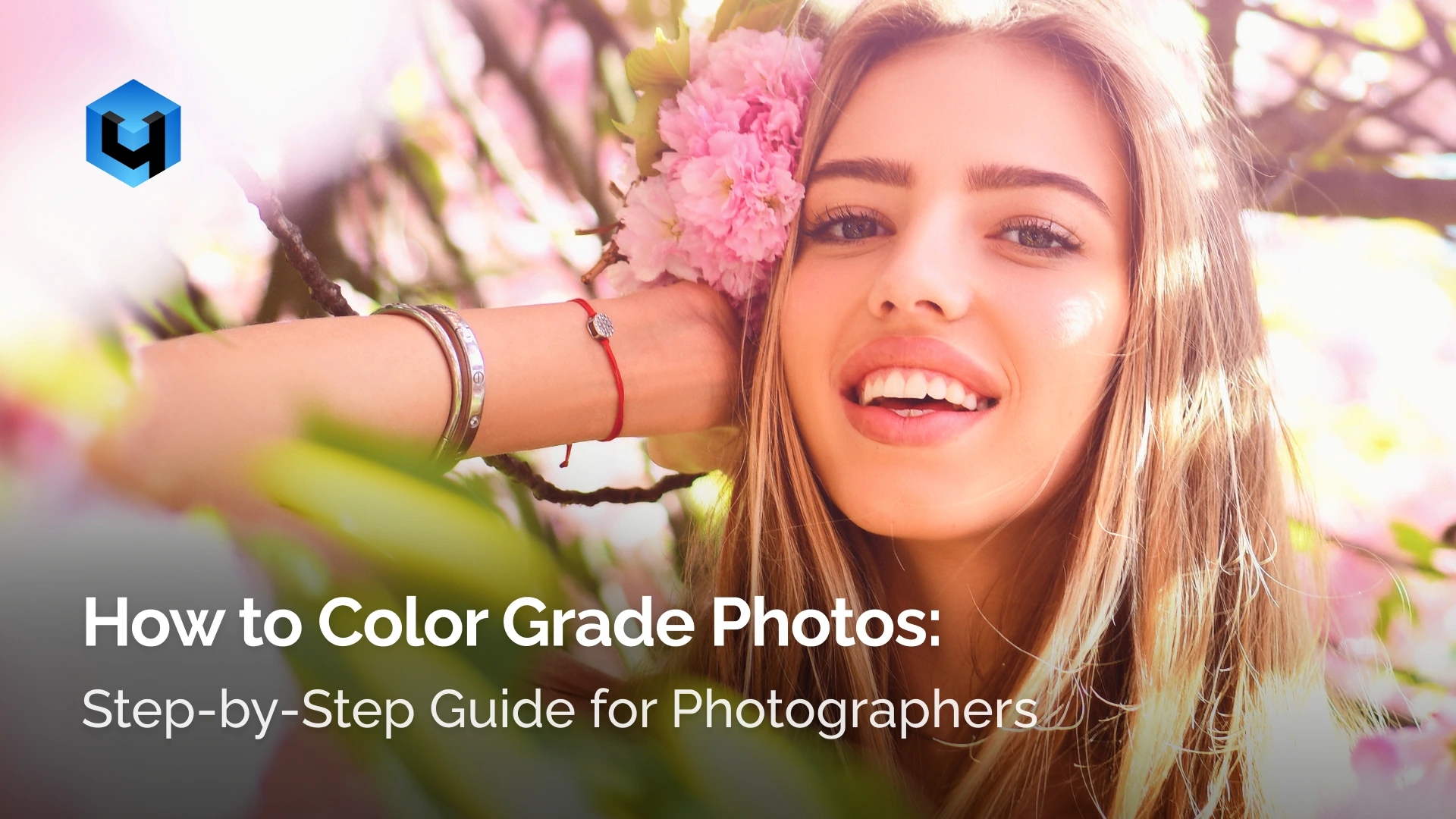
A photo can be technically correct and still feel unfinished. Exposure may be balanced, colors may look accurate, and nothing appears obviously wrong. Yet the image does not fully come together. It lacks presence and direction.
In many cases, the problem is not sharpness or lighting. It is how color behaves across the image.
In real shooting conditions, color rarely stays consistent. Light changes quickly, especially when moving between environments. A shoot in London can shift from cool daylight to warm indoor tones within minutes. In large cities like Seoul, mixed lighting sources make the situation even less predictable.
Because of this, even well-exposed images can feel slightly disjointed. Colors do not fully support each other, and the image lacks a clear visual direction.
This is the role of color grading.
Color grading brings structure to color. It connects light, contrast, and tones into a consistent visual language. Instead of simply correcting the image, you decide how it should feel.
In this guide, the focus is practical. You will learn how to shape contrast, refine color, and build a consistent look using tools in Lightroom and Photoshop. You will also see how AI can simplify the process and help maintain consistency across larger photo sets.
By the end, the goal is simple: take an image that looks correct and turn it into one that feels complete.
What Is Photo Color Grading? How Color Graded Photos Are Created
Color grading is the stage where color becomes a creative decision. Instead of aiming for accuracy, you shape how the image feels.
At this point, the goal shifts. You are no longer correcting the photo—you are defining its atmosphere.
This step comes after the image has already been balanced. First, color and exposure are corrected so everything looks natural. Then small imperfections are refined through retouching.
Only after that does grading begin.
Now the image is ready to be interpreted.
Even small changes can have a strong effect. A slight shift in temperature or tone can change how the scene is perceived.
- Warm tones can make an image feel closer and more personal
- Cool tones can create distance or a more restrained mood
- Subtle color contrast can guide attention without changing composition
These adjustments are not about fixing problems. They are about direction.
Color grading is used across all types of photography. In portraits, it helps shape skin tones and mood. In weddings, it keeps the entire gallery visually consistent. In editorial and fashion work, it often defines the photographer’s signature style.
This is where the image stops being just correct and starts to feel intentional.
Before You Start: Preparing Images for Picture Color Grading
Before moving into color grading, the image needs to be stable. If the base is inconsistent, every adjustment that follows becomes unpredictable.
Color grading does not correct problems. It builds on what is already working. If exposure or color is off, grading will only make those issues more noticeable.
At this stage, the goal is simple: make the image reliable.
What needs to be in place
There are three areas that define how the image behaves during grading: white balance, exposure, and contrast. Instead of thinking of them as steps, think of them as conditions that need to be met.
White balance affects how natural the colors feel. Different light sources introduce color shifts that are not always obvious at first.
- Warm indoor light can push the image toward yellow or orange
- Shade or cloudy conditions often introduce a blue tint
Adjust temperature and tint until neutral areas look believable.
Exposure controls how clearly the image reads.
- The subject should be easy to see
- Highlights should not lose detail
- Shadows should still contain information
If parts of the image are too bright or too dark, correct them now. These issues are much harder to fix later.
Contrast defines how light and dark areas relate to each other.
Without enough contrast, the image feels flat. With too much, detail starts to disappear.
The goal is balance. Light and shadow should be clearly separated, but not extreme.
How to recognize problems
If something feels wrong later during grading, it usually comes from this stage.
- Unnatural colors often point to white balance
- A flat image usually needs contrast
- A weak subject often comes from exposure
Going back and fixing the base is often faster than trying to correct it with grading tools.
Why this step matters
This stage is not about style. It is about control.
Once the image is balanced, color grading becomes much easier. Colors respond more predictably, and adjustments feel more precise.
A clean base does not make the image look finished. It makes it easier to finish.
How to Color Grade Photos in Lightroom (Step-by-Step)
1. Import and Evaluate the Image
Before touching any sliders, take a moment to evaluate the image as a whole.
Open your photo in Lightroom’s Develop module and look at it without making adjustments yet. At this stage, you’re not editing—you’re deciding.
Ask yourself a few key questions:
- Does the image feel flat or already contrast-heavy?
- Are any colors too dominant or distracting?
- Does the photo feel neutral, or does it already suggest a mood?
This quick assessment will guide your entire grading process.
Next, define a direction.
- If the image looks neutral → you’ll need to build contrast and color
- If it already feels strong → you may need to soften or refine
- If colors don’t match → focus on bringing them into balance
This is the transition point between correction and creative work. Instead of asking “What is wrong?” You start asking “What should this image feel like?”
2. Tone Curve: Creating Cinematic Contrast
After basic corrections, most images still lack depth.
The light is there, but it doesn’t create enough separation between elements. The Tone Curve is where you fix that.
Your goal here is not just contrast—it’s controlled, cinematic contrast.
Start with a subtle S-curve:
- Raise highlights slightly to add brightness and energy
- Lower shadows slightly to introduce depth
This creates separation between light and dark areas, helping the subject stand out without making the image look harsh.
Soften shadows for a cinematic color grading
In cinematic images, shadows are rarely pure black. They are slightly lifted, which gives a softer, more film-like appearance.
To achieve this:
- Gently raise the black point (bottom-left of the curve)
This reduces harshness in dark areas and adds a subtle fade. Be careful not to push this too far. If shadows become gray and washed out, lower the black point slightly.
Control highlights
Highlights determine how intense the light feels.
- If they are too strong → the image looks harsh
- If they are too weak → the image feels dull
Make small adjustments to keep highlights present but not overpowering.
Adjust midtones for subject clarity
Midtones affect the main subject more than any other tonal range.
- If the subject looks too dark → lift midtones slightly
- If the image feels flat → lower them a bit
Small changes here can significantly improve visibility without breaking the overall mood.
What to watch for
The Tone Curve is very sensitive. It’s easy to go too far.
- Too much contrast → loss of detail in shadows
- Too much black point lift → faded, low-quality look
- Over-bright highlights → unnatural lighting
What the result should look like
At the end of this step, the image should feel more dimensional. Shadows are soft but defined, highlights are controlled, and the subject stands out naturally. Cinematic contrast is not about making the image stronger It’s about making light feel intentional and balanced.
3. HSL Panel: Refining Individual Colors
The HSL panel allows you to adjust specific colors without affecting the entire image. This is where you correct subtle issues and guide attention more precisely.
It works across three controls:
- Hue → shifts the color itself
- Saturation → controls intensity
- Luminance → controls brightness
Hue (color accuracy)
Use Hue when a color feels slightly off.
- Skin tones that look too red can be shifted slightly toward orange
- Greens can be moved toward yellow for a more natural look
- Blues can be deepened to avoid a cyan appearance
These are small adjustments, but they help colors feel more realistic.
Saturation (control intensity)
Instead of increasing global saturation, adjust individual colors.
- Reduce colors that draw too much attention
- Slightly increase colors that support the subject
This keeps the image balanced and avoids an artificial look.
Luminance (depth and separation)
Luminance controls how bright or dark each color appears.
- Darker blues can add depth to the sky
- Brighter skin tones help the subject stand out
- Slightly darker greens can reduce background distraction
This is one of the most subtle but effective tools for shaping depth.
How to approach HSL
Don’t adjust everything. Focus only on what feels off:
- Which color is distracting?
- Which color looks unnatural?
- Where is the viewer’s attention going?
Then make targeted adjustments.
What to watch for
- Too much saturation → artificial colors
- Strong hue shifts → unrealistic tones
- Extreme luminance → uneven image
If something feels wrong, reduce the adjustment slightly.
What the result should feel like
Colors should look clean, balanced, and natural. Nothing should distract from the subject, and adjustments should not be obvious.
4. Color Grading Panel: Building Mood
This is where the image moves from correction to style. Instead of fixing colors, you begin shaping the overall atmosphere by adding subtle color to different tonal ranges:
- Shadows
- Midtones
- Highlights
Create color contrast
If all parts of the image share the same color temperature, the result can feel flat. A common approach is to introduce contrast:
- Cooler tones in shadows
- Warmer tones in highlights
This creates separation and adds depth.
Adjust shadows (base mood)
Shadows influence the overall tone of the image.
- Cooler shadows → cinematic, slightly dramatic feel
- Warmer shadows → softer, more natural look
Even small shifts here affect the entire image.
Adjust highlights (light quality)
Highlights shape how light is perceived.
- Slight warmth → inviting, natural look
- Reduced warmth → more neutral or controlled feel
This is especially noticeable in bright areas and skin tones.
Adjust midtones (subject balance)
Midtones affect the subject directly.
Changes here should be minimal.
If pushed too far, skin tones and natural colors will break quickly.
Control intensity
Keep all color adjustments subtle.
If the color effect is clearly visible, it’s usually too strong. Lowering saturation helps blend the effect naturally.
What to watch for
- Too much color → artificial look
- Strong shadow tint → heavy color cast
- Overworked midtones → broken skin tones
If something feels off, reduce saturation first.
What the result should feel like
The image should have a clear mood, but the effect should remain subtle. The viewer should feel the atmosphere without noticing the grading itself.
5. Calibration Panel: Final Color Balance
The Calibration panel is used for small, global adjustments that affect how colors interact across the entire image. This is a refinement step, not a correction step.
How it works
It adjusts three primary channels:
- Red
- Green
- Blue
Each one influences multiple colors at once.
Refine skin tones (Red channel)
The red channel has a strong impact on skin.
- Small shifts can make skin warmer or more neutral
- Slight saturation changes can add richness or softness
Keep adjustments minimal to avoid unnatural results.
Adjust overall mood (Blue channel)
The blue channel strongly affects the overall color balance.
- It can push the image warmer or cooler
- It influences how shadows and highlights relate to each other
Useful for subtle global shifts.
Fine-tune balance (Green channel)
The green channel is less obvious but helps with small corrections.
Use it if something feels slightly off and hard to define.
How to approach Calibration
Think of this as a finishing tool.
Make very small adjustments and review the entire image after each change.
What to watch for
- Large shifts → unrealistic colors
- Too much saturation → unstable image
- Over-adjustment → loss of harmony
If something breaks, reset and apply smaller changes.
What the result should feel like
At this stage, the image should feel cohesive. All colors should work together naturally, with no single tone standing out too much.
6. Creating and Applying Presets
Presets allow you to save a look and apply it to other images. They are useful for both speed and consistency.
Start with a finished image
Only create a preset from an image that already looks complete:
- Contrast is set
- Colors are balanced
- The mood is clearly defined
Save the preset
When creating a preset:
- Include color and contrast adjustments
- Avoid locking exposure and white balance
These often need to change from image to image.
Apply and refine
When applying a preset:
- Treat it as a starting point
- Adjust exposure if needed
- Refine colors if lighting differs
Even similar images may require small corrections.
When presets work best
Presets are most effective when images share:
- Similar lighting
- Same location
- Consistent mood
In these cases, they can be applied across a full set with minimal adjustments.
7. Evaluate the Result (Before and After)
The final step is to compare your result with the original image.
Look for:
- Improved depth and contrast
- Cleaner, more consistent colors
- A clear and unified mood
Good color grading should feel natural. If the edit is obvious, it’s usually too strong. Reduce it slightly.
How to Color Grade Photos in Photoshop
Photoshop handles color grading in a different way than Lightroom. Instead of working with a single panel of sliders, you build the image step by step using layers.
Each adjustment sits on its own layer. This means you can control not only how strong the effect is, but also where it appears in the image.
Because of this, Photoshop is often used when more precision is needed, especially when grading is combined with retouching.
In most workflows, the image is first prepared in Camera Raw, then refined inside Photoshop.
1. Start in Camera Raw
When opening a RAW file in Adobe Photoshop, it first appears in Camera Raw. This stage works similarly to Lightroom and serves the same purpose: preparing a stable base.
At this point, avoid styling. Focus only on balance.
- Remove color casts with white balance
- Adjust exposure so the image reads clearly
- Add light contrast if needed
The image should look natural and neutral. Once it feels stable, open it in Photoshop.
2. Shape contrast and color with Curves
Curves is the central tool for grading in Photoshop. It controls both brightness and color, depending on how it is used.
Start with contrast. A gentle S-curve separates light and dark areas and adds depth without making the image harsh.
Then move into color.
Curves works through channels:
- Red channel affects red and cyan
- Blue channel affects blue and yellow
- Green channel affects green and magenta
These channels allow you to shift the overall mood.
- If shadows feel too warm, adding blue can cool them down.
- If highlights feel too cold, a small amount of warmth can balance them.
Because these changes affect the entire image, subtle adjustments are enough.
3. Refine specific colors
After setting contrast and overall color direction, small inconsistencies often become visible. This is where Selective Color is useful.
Instead of shifting colors directly, it adjusts how much of each color component is present.
This makes it effective for fine corrections.
For example, skin that feels slightly yellow can be balanced by reducing yellow in the red range. Shadows that lean green can be corrected by adding magenta to neutral tones.
These changes are usually minimal, but they help the image feel more controlled.
4. Introduce mood with Gradient Map
Gradient Map works by assigning color to brightness values. One color is applied to shadows, another to highlights.
This makes it a strong tool for stylized looks.
Apply a gradient and then reduce its opacity. At full strength, the effect is almost always too strong. Lowering it allows the color to blend naturally into the image.
This technique is often used to create subtle cinematic color contrast.
5. Explore looks with LUTs
Color Lookup layers apply predefined color styles. They are useful for quickly testing different directions.
Instead of building a look from scratch, you can preview several options in seconds.
However, LUTs rarely fit perfectly on their own. After applying one, adjust opacity and refine the result with other tools.
They work best as a starting point, not a final step.
6. Control everything with layers
The main advantage of Photoshop is control.
Every adjustment exists independently, which allows you to:
- Reduce intensity using opacity
- Apply effects only to selected areas using masks
- Compare changes by toggling layers
For example, you can apply grading to the background while keeping skin tones unchanged. This level of precision is what makes Photoshop more flexible.
What to watch for
Because Photoshop allows so much control, it is easy to overwork the image.
- Too many layers can make edits harder to manage
- Strong adjustments can break natural color
- Stacking multiple effects can reduce consistency
If the image starts to feel heavy or artificial, simplify the process.
When Photoshop makes sense
Photoshop is most useful when you need control.
- For detailed, localized adjustments
- For single images rather than large batches
- For workflows that include retouching
For faster editing across many images, Lightroom is usually more efficient.
Final note
Even though the tools are different, the logic stays the same. First build contrast, then refine color, and only after that shape the mood.
How to Color Grade with AI
AI color grading can be one of the most time-consuming parts of editing.
Even a simple look can take several minutes per image, and when working with large sets, that quickly becomes hours of repetitive work.
Consistency is another challenge.
Images taken under different lighting conditions rarely match perfectly, even with careful manual adjustments.
This is where AI changes the workflow.
Instead of adjusting each parameter manually, AI analyzes the image as a whole—looking at tones, contrast, and color relationships—and applies balanced corrections automatically.
The result is faster editing and more consistent outcomes.
AI Color Match: Apply a Style Instantly
One of the most useful AI features is color matching.
It allows you to transfer the color style from one image to another without rebuilding it step by step.
The process is simple:
- Upload your image
- Provide a reference image
- AI applies the same color style
Instead of recreating a look manually, you define it once and reuse it.
Tools like Retouch4me Color Match analyze the reference photo and replicate its color palette, contrast, and overall feel within seconds.
This is especially useful when you already have a “hero” image and want the rest of the set to match it.
Apply a consistent look instantly and refine only when needed instead of repeating the same adjustment. Color grade with AI in one click.
Batch Color Grading: From Hours to Minutes
Manual grading works well for single images, but it becomes inefficient with large volumes.
AI simplifies this process.
Instead of editing each image individually:
- Choose one reference image
- Apply AI color matching
- Process the entire set
This approach is widely used in:
- Wedding photography
- Events
- Editorial shoots
- E-commerce and product photography
- Social media content
What used to take hours can now be completed in minutes.
Consistency Without Manual Adjustment
Maintaining consistency across multiple images is one of the hardest parts of color grading.
Lighting changes, environments shift, and colors behave differently in every frame.
AI helps solve this by standardizing the result:
- If images look different → AI aligns them
- If colors shift → AI normalizes tones
- If style varies → AI applies one consistent direction
This creates a cohesive visual series without constant manual correction.
Before and After: What Actually Changes
The benefit of AI is not just speed—it’s consistency.
Before:
- Colors vary between images
- Editing requires constant attention
- Matching a style takes time
After:
- Colors feel unified
- The look is applied instantly
- The workflow becomes faster and simpler
The final image still looks natural—it just looks finished.
When to Use AI
AI works best when:
- You are editing large batches of images
- You need consistent results across a series
- You already have a defined style
For single images or highly detailed work, manual grading still offers more control.
Stop spending hours matching colors across images.
Build a consistent look in seconds instead of minutes.
Popular Color Grading Styles & How to Achieve Them
Different styles change how an image feels. The same photo can look calm, dramatic, or cinematic depending on color choices.
Instead of mixing looks, choose one direction and keep it consistent.
Cinematic Teal and Orange
You have seen this look in movies. Skin tones stay warm, while shadows shift toward teal or blue. This creates strong separation between subject and background.
To recreate it, push shadows toward teal in the Color Grading panel and add warm tones to highlights. Then increase contrast slightly using the Tone Curve.
Keep it controlled. If skin turns too orange, reduce saturation.
Moody Desaturated
This style removes excess color and focuses on depth. The image feels quieter and more serious.
Lower saturation in HSL and deepen shadows with the Tone Curve. A slight drop in exposure can help reinforce the mood.
Do not remove all color. The image should feel muted, not lifeless.
Bright and Airy (Wedding Style)
This look feels soft and clean. Shadows are lifted, contrast is low, and the image feels light overall.
Increase exposure, lift shadows, and reduce contrast. Colors should stay gentle and slightly desaturated.
If highlights start losing detail, bring them back slightly.
Vintage / Film Emulation
This style mimics film photography. Colors feel softer, and contrast is less aggressive.
Lift the black point in the Tone Curve and add subtle warmth to highlights. Slight color shifts in Calibration can help create a more organic feel.
The result should feel nostalgic, not outdated.
Dark & Moody (Editorial)
This look is often used in fashion and storytelling. It relies on deep shadows and controlled highlights.
Lower exposure slightly and deepen shadows using the Tone Curve. Add a cool tint to shadows to enhance the mood.
Keep highlights under control. Bright areas should not dominate the frame.
Tips for Better Color Grading
Color grading is about control, consistency, and restraint. These simple tips will help you achieve cleaner and more professional results.
Use a calibrated monitor
Your screen affects how you see color. If it is too bright or too warm, your edits will be inaccurate.
- If colors look different on other devices → your monitor may not be calibrated
A calibrated monitor helps you make reliable decisions.
Avoid over-saturation
Too much color is one of the most common mistakes. It makes images look artificial and distracting.
- If colors feel too strong → reduce saturation or vibrance
Focus on keeping colors natural, especially in skin tones.
Keep skin tones natural
Skin tones are the most sensitive part of any image. Even small shifts can look unnatural.
- If skin looks too orange or red → adjust orange/red in HSL
- If skin looks dull → add slight warmth
Always check skin tones first when grading.
Build your own presets or LUTs
Creating your own presets helps speed up editing and maintain a consistent style.
- If you repeat the same look → save it as a preset
- If you work with series → reuse and refine
Over time, this builds a recognizable visual identity.
Stay consistent across a series
Consistency is key when working with multiple images. A strong style should look the same across the entire set.
- If images feel different → align white balance and color grading
- If style shifts → use presets or AI color match
A consistent series always looks more professional.
Less is more
Color grading works best when it is subtle. Strong adjustments in contrast, color, or tone can quickly make the image look overprocessed.
- If the effect is noticeable → reduce it slightly
The viewer should feel the result, not see the editing.
Take breaks and review
After working on an image for a long time, it becomes harder to judge colors correctly.
- If something feels off → step away and return later
Fresh eyes help you see problems more clearly.
Key Takeaways
- Color grading is what gives a photo its final character. A technically correct image may look clean, but grading is what makes it feel complete.
- The process works best when it follows a clear order. Start with contrast, then refine individual colors, and only after that introduce stylistic changes.
- Most adjustments come down to a few key tools. The Tone Curve defines depth, HSL helps control specific colors, and the Color Grading panel shapes the overall mood.
- Strong effects are rarely necessary. Subtle changes tend to look more natural and hold up better over time.
- Each style may look different, but the foundation stays the same. Balanced contrast and controlled color are what make any look work.
- Consistency matters just as much as the edit itself. A single strong image is good, but a consistent series feels intentional and professional.
- AI tools can simplify this process. Instead of repeating the same steps, you can apply a consistent look across multiple images in seconds.
FAQ
How do you start color grading photos?
Begin with a balanced image. Make sure exposure, white balance, and contrast are in place, then move into color adjustments. Build the look gradually rather than changing everything at once.
What is the best software for color grading photos?
Lightroom is a good starting point because it keeps everything simple and organized. Photoshop offers more control, especially for detailed edits. AI tools can speed up the workflow when working with larger sets of images.
Can AI handle color grading?
Yes. Modern tools can analyze an image and apply a consistent color style automatically.
For example, retouch4me Color Match can transfer the look from one image to another, which is useful when you need a uniform result across a full shoot.
What is the difference between a preset and a LUT?
A preset adjusts editing settings inside the software, such as exposure, contrast, and color sliders. A LUT applies a predefined color transformation. Instead of changing individual settings, it remaps how colors appear across the image.
How do you keep skin tones natural?
Start with correct white balance, then refine orange and red tones carefully. If skin starts to look unnatural, it usually means the colors are pushed too far. Reducing saturation slightly is often enough to bring it back.