Keep projects and source photographs available
What you will do
Section titled “What you will do”Keep a project usable by leaving imported source photographs where Arams expects to find them. You will learn how source photographs differ from project data and exported copies, and how to restore a source that becomes unavailable after you move or rename it.
Before you start
Section titled “Before you start”Sign in to Arams and open the project you want to check. If you plan to move or rename a source to see what happens, work with a copy rather than a client’s only original.
Distinguish project data, sources, and exports
Section titled “Distinguish project data, sources, and exports”The three kinds of files serve different purposes:
- Project data is the catalog and other application-managed information. On Windows, a project created with Location set to Default stores this data below Pictures\Retouch4me Arams\Projects, including a hidden .retouch4me folder. Let Arams manage these files.
- Source photographs are the files you import. They remain in their source folder; importing them does not move them into project storage. Keep them at the imported path so that Arams can continue to read them.
- Exported copies are new files created by an export. Their location, names, and dimensions depend on your export settings. An exported copy does not restore an unavailable source path.
Open the project and wait for the filenames and photographic thumbnails to appear.
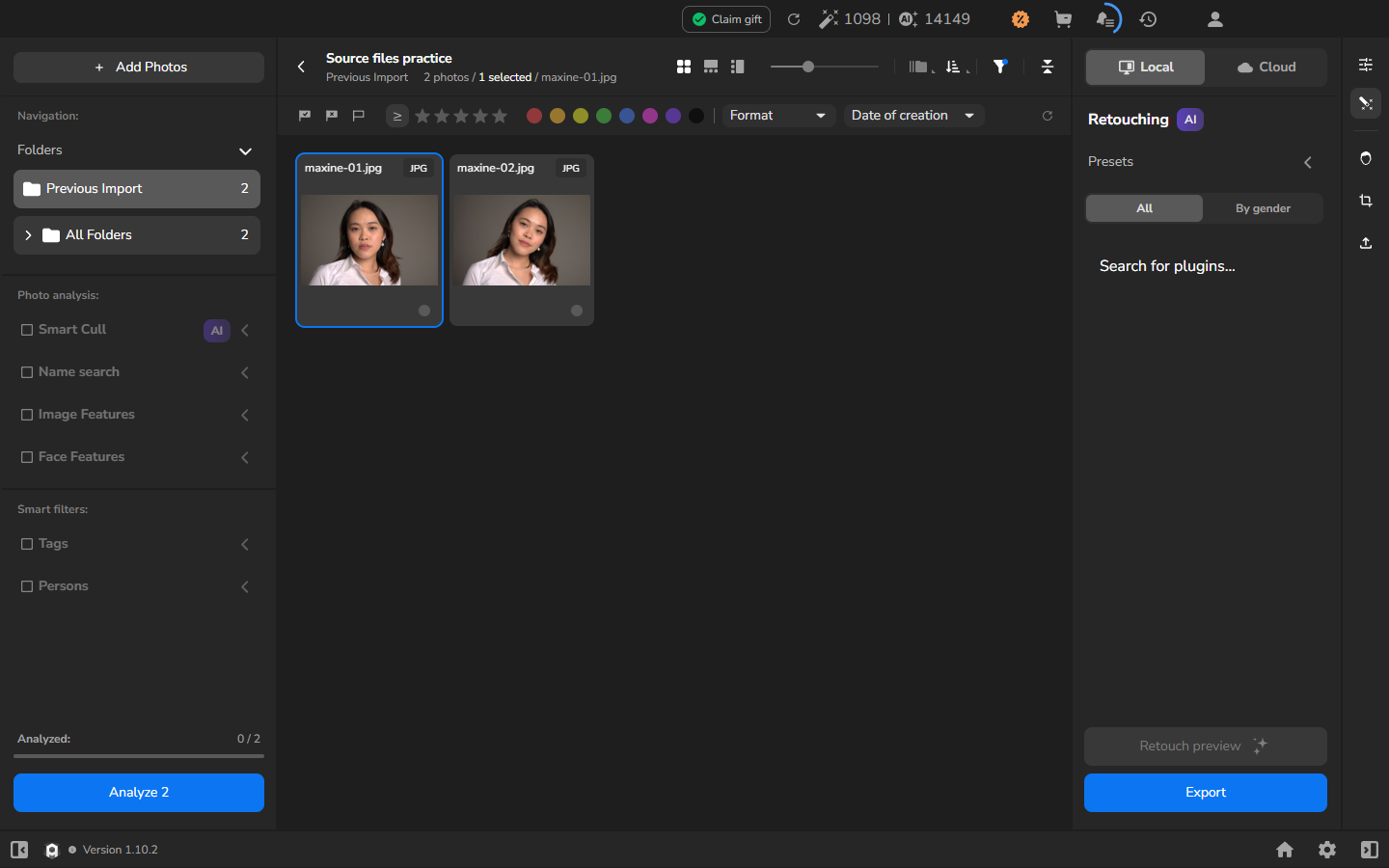
For export instructions, see Prepare files for delivery. Do not move, rename, or delete files inside .retouch4me while following this chapter.
Observe a temporarily unavailable source
Section titled “Observe a temporarily unavailable source”If you move or rename an imported source photograph outside Arams, its card remains in the project but appears dimmed, with an unavailable-image symbol over the cached preview. Other available photographs continue to appear normally. In this state, Arams does not show a separate error message or a control for choosing the file at a new location.
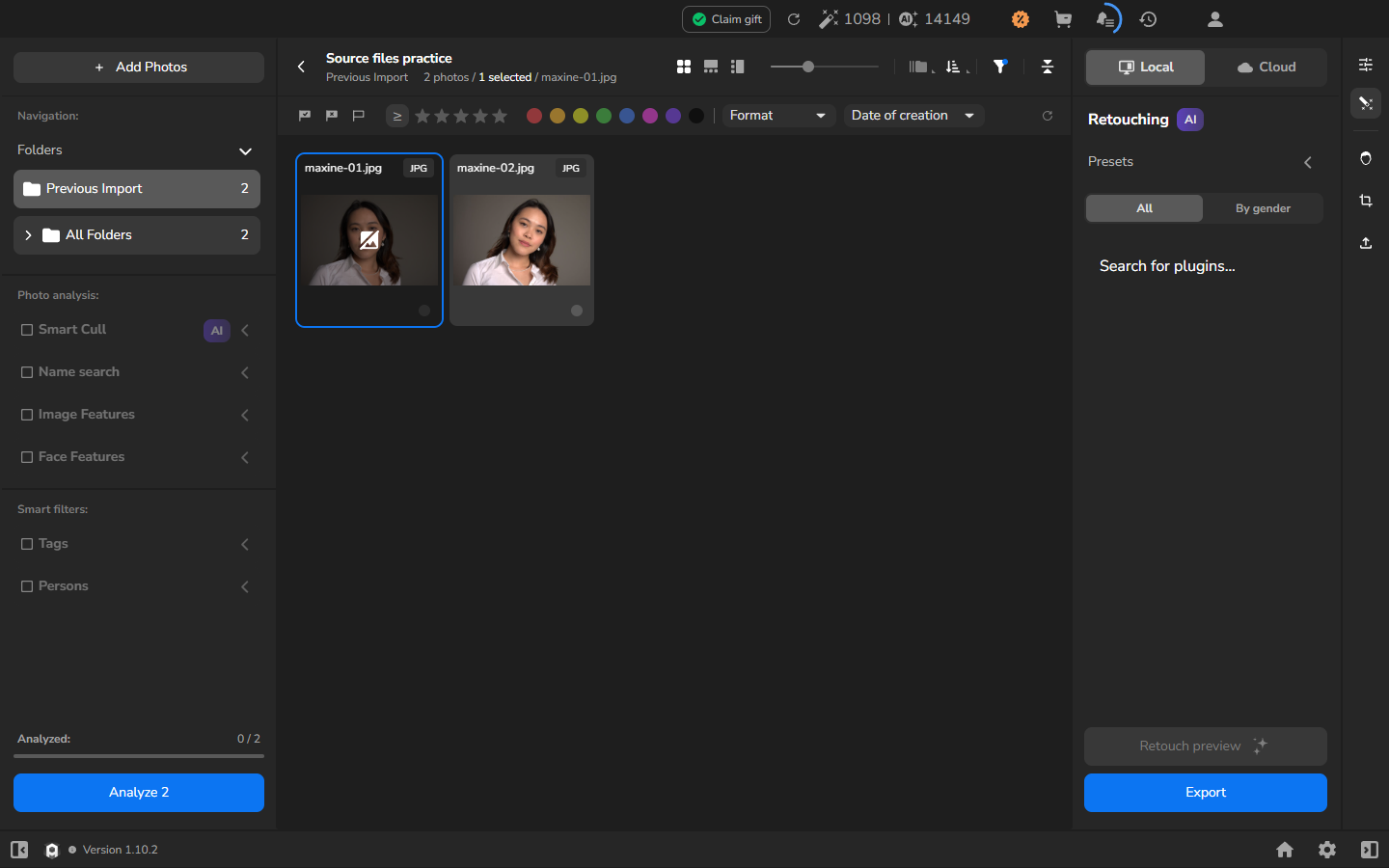
A cached preview and an unchanged photo count do not mean that Arams can still read the full-resolution source. Stop here instead of starting analysis, retouching, or export with the source absent.
Restore the exact path and reopen the project
Section titled “Restore the exact path and reopen the project”- Return to the home screen so that the project is closed.
- In Windows File Explorer, return the photograph to its original source folder with its exact imported filename and extension.
- Reopen the project. Do not import the photograph again.
- Wait until its photographic thumbnail has loaded and the unavailable-image symbol has disappeared.
The preview recovers automatically after the exact path is restored; you do not need a recovery command.
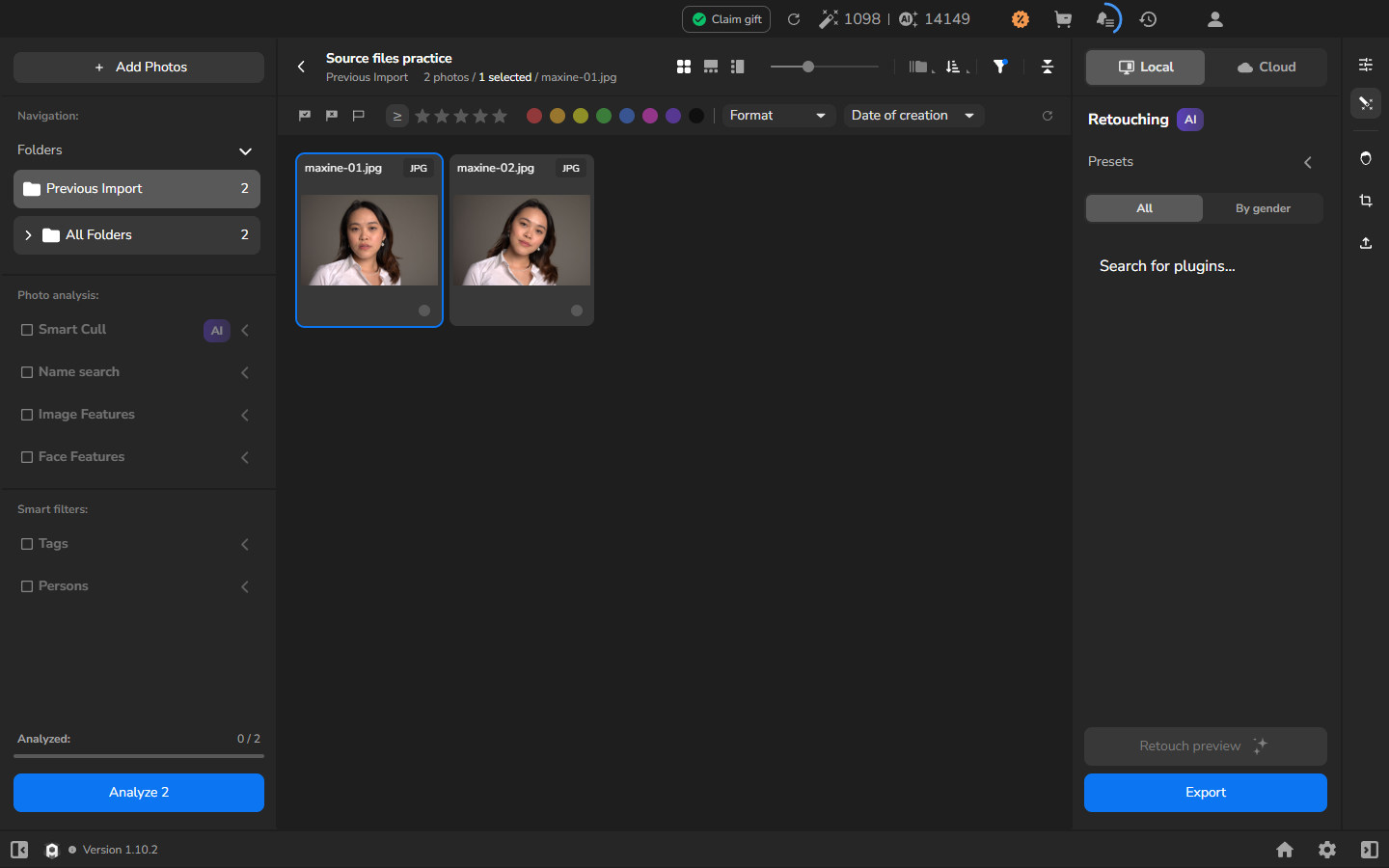
Check the result
Section titled “Check the result”When the thumbnail appears without the unavailable-image symbol, Arams can read the restored photograph again. The catalog remains in Arams project storage, while the source photograph remains in its original folder.
This method restores a source at its original path. It does not cover moving a source permanently to a new folder or relinking it from Arams.
If it does not work
Section titled “If it does not work”- The restored card still shows the unavailable-image symbol: check the source folder, exact filename, and file extension. Close and reopen the project after the file is back at its imported path.
- The filename or cached preview remains visible while a source is absent: do not treat either one, or the photo count, as proof that Arams can read the original.
- You moved project data instead of a source photograph: stop. Do not move files inside .retouch4me or attempt catalog repair as part of this procedure.
- You cannot restore the source photograph: preserve the file you still have and stop. Do not reimport another photograph merely to make the project count match.
- An exported copy is missing: check the destination and naming settings in Prepare files for delivery. Restoring a source path does not recreate an export.