Diagnose import failures
What you will do
Section titled “What you will do”If photographs you dragged into a project do not appear, check whether the import started and retry with JPEG photographs. You can use the same project; you do not need to create another one first.
Before you start
Section titled “Before you start”Open the affected project and find the JPEG photographs you want to import in Windows File Explorer.
Diagnose an empty import
Section titled “Diagnose an empty import”- Check the photo count beside the project name. If it reads 0 photos / 0 selected, the project does not contain any photographs.
- Look for photo cards in the central area. The Start with AI panel and central Add Photos button belong to the empty-project screen; the pictures in that panel are examples, not imported photographs.
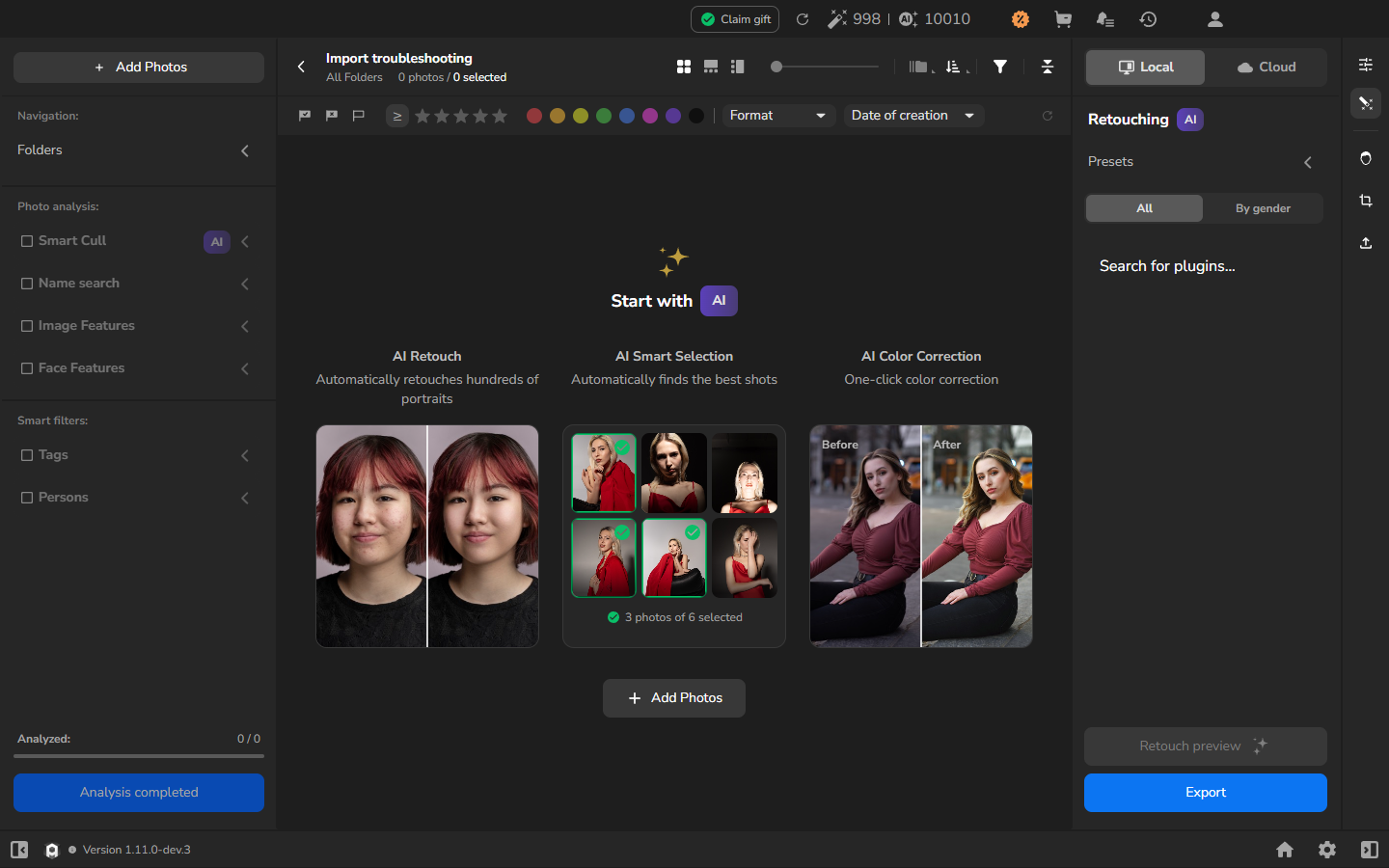
- In File Explorer, check the files you attempted to drag into Arams. Make sure you selected photographs rather than a text document or another unrelated file.
- If the count remains 0 photos and no photo cards appear, the files were not added. Arams may leave the empty-project screen visible without showing an error dialog.
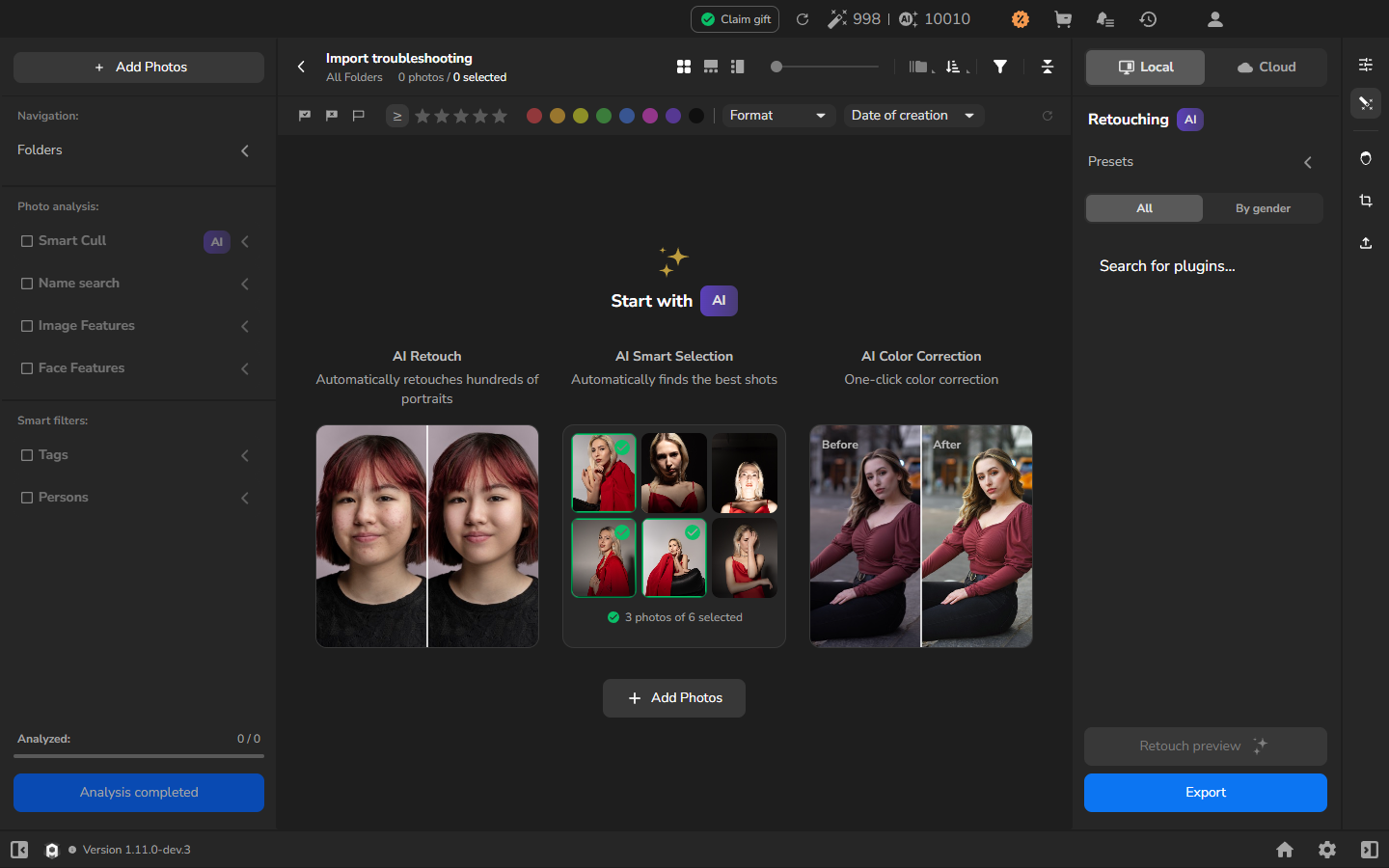
A non-photo file can leave the project empty without showing an error. The empty screen does not identify the cause, so check the source files and any error message before retrying.
Retry with JPEG photographs
Section titled “Retry with JPEG photographs”- Leave the same project open.
- In File Explorer, select the JPEG photographs you want to import.
- Drag them into the central photo area and release them there.
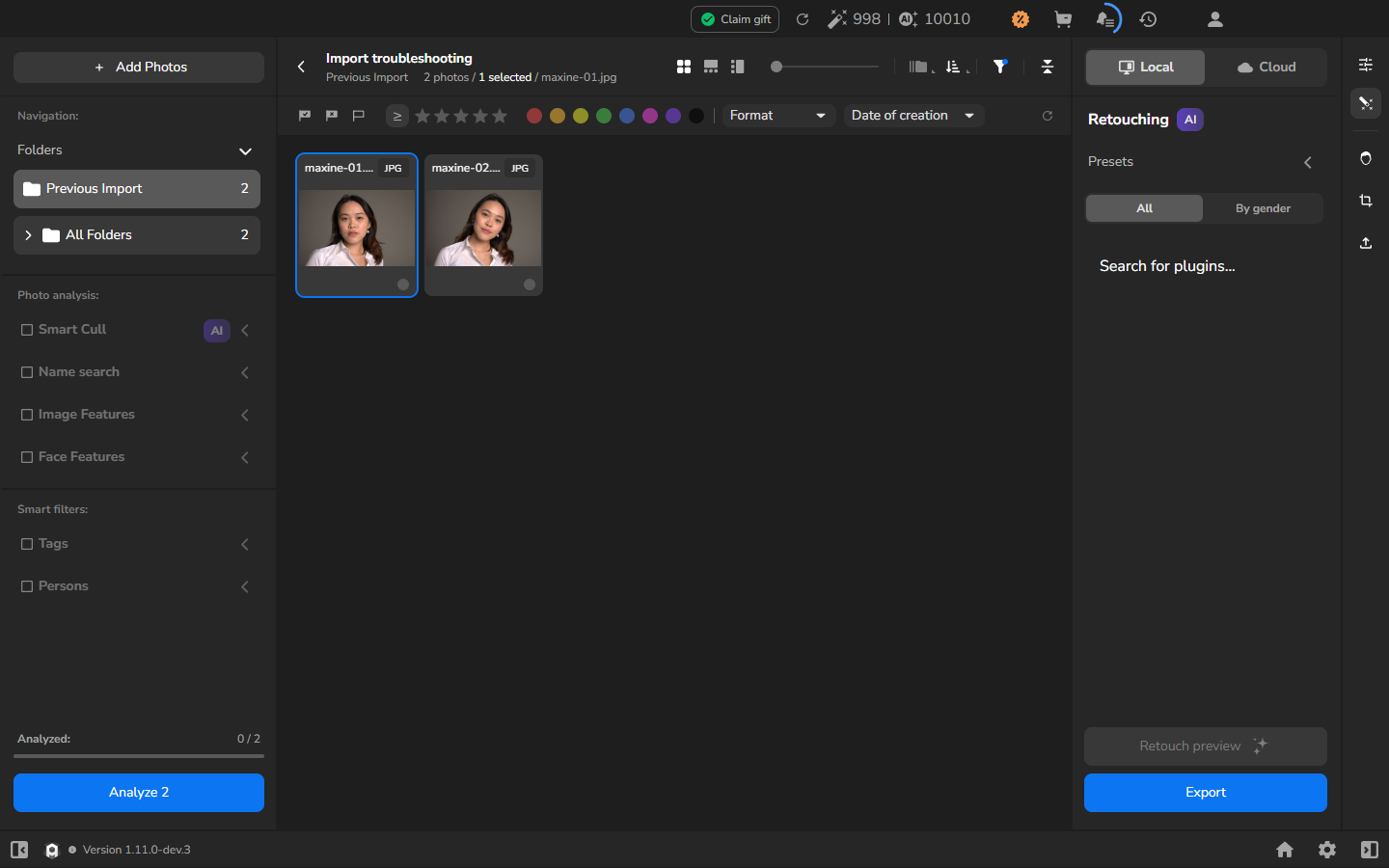
- Wait for the photograph thumbnails to appear in the grid.
- Compare the photo count and card names with the files you selected.
Check the result
Section titled “Check the result”Previous Import shows how many photographs were added in the latest import. The top counter separates the total number of photographs in the project from the number currently selected.
Card names may be shortened to fit the grid; the selected photograph’s full filename appears beside the top counter. A loading symbol is not yet a photograph thumbnail, so wait for the image to appear.
When the thumbnails, filenames, and photo count match your source files, the retry is complete.
If it still does not work
Section titled “If it still does not work”| What you see | What to check next |
|---|---|
| 0 photos and the empty-project panel | Check that you selected the intended JPEG photographs, then repeat the drag-and-drop steps above. |
| Cards with loading symbols instead of photographs | Wait for the thumbnails. If they do not appear, note which files remain stuck. |
| Fewer photographs than you selected | Compare the source filenames with the card names to identify the missing files. |
| An error dialog, or JPEGs still do not appear | When reporting the problem, include the exact message, file types, number of files, Arams version, and whether you used drag-and-drop or Add Photos. |
This procedure covers JPEG photographs added by drag-and-drop. It does not establish which other formats Arams supports. If the problem involves corrupt or unavailable files, duplicate imports, or the Add Photos dialog, include that detail when you report it; the retry above may not address it.